
pan(ama)demonium
pan·de·mo·ni·um /ˌpandəˈmōnēəm / noun. wild and noisy disorder or confusion; uproar.

1. For the Last Time
Writing is a skill, and I appear to be very out of practice. You see, instead of formulating a sequence of coherent thoughts about a Memorable Life Experience (my last debate world championship), I chose to spend my seven hour flight home from Panama doing the following:
Sleeping
Doomscrolling (an impressive feat considering the lack of Wifi)
Apathetically bothering debate friends about nothing in particular
Nevertheless, here I am, tip-tapping away in my notes app the last 20 minutes before my flight lands. So, as they say, here goes nothing1:
For the last time, I’m starting in 3, 2, 1…
I find it difficult to render an intelligible narrative about my debate experience, to string together discordant bits and pieces of bygone memories. It feels somewhat self indulgent, pretentious even, to assume that anyone would be interested in reading about your life from cover to cover. I cower in the shadows of feminine literary giants — the Rooneys, Westovers, and Woolfs of this world. Tantalizing writing packaged into the saccharine envelope of an illustrious career. Droves of readers enticed by the siren-song of an unorthodox life story.
Ah, the glory of an unconventional life. I envy the tender bliss of the European twentysomethings. Voluntary unemployment paired with voluntary over-education. Sweet, spiraling smokestacks of a cigarette-flavored exhale. Blood pacts sanctified with the ink of red wine. Cheeky photos, effervescent smiles, nonchalant wit, and an effortless cosmopolitan style that I cannot emulate without setting off the overt alarms of intentionality.
Instead, I am an empty bottle of $10 vodka, purchased at a Panamanian grocery store on New Year’s Eve. I am a feverish exponential equation of compounding anxiety plotted along the x-axis of a Queen-sized hotel bed. I am sleep-deprived and restless, composing and recomposing the contingencies of an ever-approaching morning. I am the American dream, an undeserving yet willful recipient of hard-work-pays-off-isms. I am also a killer of dreams, the harbinger of a deadly zero sum game, the arbiter of “it should have been me.” And in the end, I am a speck(tacle) of dust, an imperceptible bacterial colony growing in a burger ordered off a foreign McDonalds menu, swirling in the stomach of my unsuspecting teammates until violently ejected down a Panamanian drain.
After this brief pandemonium, I am now a nobody again. As a nobody, where do I go from here?
2. Free Will For Sale!
Has anyone heard of this thing called free will? It’s the new drug of the modern elite. Free will is a magical pixie dust separated into clean white lines, callously strewn on a hotel room table, starkly dividing the Knows from the Know-Nots.
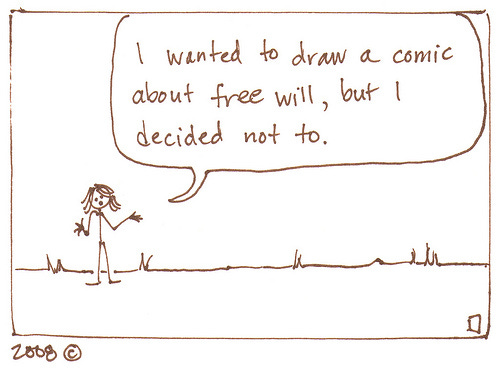
So, shall we embark on a journey together?
Debate has taught me a lot about free will. I grew up in a place where most people looked the same, dressed the same, thought the same, acted the same. The hegemonic peer pressure of conformity changed seasonally, extending from head to toe. This conformity was emblematically captured in a revolving door of socially-acceptable shoe brands. Converse, Adidas, Reebok, Vans, and others I couldn’t afford. Rinse and repeat. I am known to be habitually late, so I quickly fell behind in the rat race.
I suppose conformity is one form of privilege. Free will is another.
Most people I know have gone through college the normal way: Classes, exams, friends, parties, relationships, breakups, interviews, graduation, jobs. I was very nearly one of these people. I accidentally joined two consulting clubs without knowing what consulting was. I went to frat parties and jostled around with kids who pretended they were cool back in high school. I took classes that weren’t too difficult. I clocked in my daily participation points. Days of ennui. The economics of blasé faire.
Debate broke up the monotony. I found myself jettisoned off of 4am flights to Boston and New York City and Providence and New Haven and Washington D.C and Toronto. I sandwiched myself between antisocial chess players and whimsical philosophy enthusiasts. I traversed the inner labyrinths of elite university buildings and bespoke coffee shops until these liminal spaces felt more familiar than my Alma Mater itself. I slept on the grimy dorm room floors of complete strangers while lying mere inches away from the toasty bodies of other strangers. I counted down the days until the inevitable encroachment of chronic back pain. Debate tournaments are a suspension of time and space. Life becomes an indefinite answering machine. Problem sets, text messages, social outings put on hold until the return flight home.
How many ordinary people can mindlessly list off the names of random university students scattered across around the globe? I have grown familiar with a strangely insular web of high-achievers, each possessing a healthy dose of main character syndrome. Many go on to pursue the types of careers that make the world turn around and around. These ex-debaters take shelter in hedge funds, consulting firms, law schools, academia, think tanks, and political offices. Some run away from their past, and others never quite grow out of it. The assorted flavors of these side-characters tend to blur together in my mind. At times, while walking across campus, I’ll pass by someone who looks vaguely familiar and do a double take: Was that the kid who judged me last month in debate or an unsuspecting classmate from my international relations seminar?
Debaters love free will. They dye their hair all sorts of colors and wear go-go boots while strutting across an auditorium floor. They shift fluidly between pronouns, friend groups, and social paradigms. They meticulously curate and optimize their life philosophies. They conclude that I am morally obligated to live off of a diet of scallops. Yum.
So yes, debate made me realize that free will exists.
Normal people do not question whether they are rule utilitarians or cultural Marxists. They do not discuss whether sleeping with a white woman reinforces the postcolonial Hegelian dichotomy of subject/object. Normal people do not involve themselves in a perpetual simulation of continental drift by forming long-distance friendships made possible by generous university endowments and abundant carbon emissions. Normal people do not cram their brain with obscure historical examples of sport greenwashing, Islamic feminism, and post-COVID educational reform just so they can monotonously recite these facts in debate rounds.
It’s all quite pretentious. Normal people do not wipe their minds clean, adopting different opinions at the flip of a coin. Normal people do not lie about their beliefs until the lies eventually become the truth.
When every debate topic is theoretically balanced, debatable, and subjective, are all our opinions merely arbitrary decisions? Do our minds exist on the razor edge of a coin? Without conviction in my beliefs, how do I will myself to care?
Cogito, ergo sum: I think, therefore I am.
Non cogito, ergo non sum: I do not think, therefore I am not.
(I can’t even order dishes from a menu anymore.)
3. In Pursuit of Validation
“Man is born free but everywhere he is in chains.” —Jean-Jacques Rousseau
Somehow, somewhere, I injected myself in this strange jumble of so-called “free thinkers.” How? I don’t have a particularly unique life story, exceptionally interesting skills, or outlandish character traits to justify my presence in this crowd.
“Where are you from? What are your passions? What’s your DEAL?”
I hate these types of questions.
Sure, I can passably feign enough intellectualism to debate the ideological merits of Freud, Malthus, and Marx. I can nod and affirm at all the right times, pretending I understand the regional politics of Bangladesh or Sri Lanka. (I don’t.)
Playing a character is easy until the spotlight turns to me. How does one respond: thank you for sharing your story. As for me, I grew up in a standard upper-middle class family, in a quiet suburb, surrounded by non-lethal dosages of familial drama, spending half my childhood in a fairly normal public school, the other half in an academically mediocre and somewhat racially segregated private school, existing within a somewhat opaque bubble of privilege, surrounded by prototypical smart-but-lazy kids, spending most my time in mundane school clubs, driving around on the weekends to compete in a niche athletic sport nobody cares about, accomplishing nothing of particular interest?
These days, my life is more of the same. I have good grades, a good job in the pipeline, good friends, a good family, good conversations, a good safety net. For all intents and purposes, I seem to have the perfect set-up to maximize free will. I could take classes on Zizek and Plato and Arendt and Hegel and Hayek and Simmel and Mauss. I could stop caring so much about my grades and start operating the ticket booth of our film club or join the Judo team or make chairs out of scrap wood. I could backpack across the country and stay in hostels and join a Jordanian Bedouin camp. I could get in trouble for climbing roofs or set grapes on fire in the microwave or guzzle three bottles of wine or join an improv group. I could befriend interesting people with all different mental prognoses on various medical spectrums and then spend my days shooting the shit in the ground floor of the library. I’ve done some of these things, I haven’t done others.
For the first two years of college, I hid the fact that I did debate from most of my non-debate friends. I was embarrassed precisely because collegiate debate was nothing but an act of free will. There were no more college applications, parents-of-friends to impress, or weird high school toxicity to justify joining the debate team.
The explanation was therefore simple: I debated because I wanted to.
Or did I?
People maximize life along many different dimensions. Some chase money or fun or fame or security or love. I’ve always sort of been driven by a nascent desire for validation. Internal, external? Who knows the difference.
Curiously, many people in my life would describe me as the opposite of a people-pleaser. I am the girl who sat at the popular jocks’ lunch table for a week as a futile “social experiment.” The girl who forced her teachers to review student-created memes which publicly lambasted them. The girl who convinced her friends to compete in a school-wide gaming tournament (as the only women) under the team name “Daughters of Slaughter”(we lost every round). To these friends, I look like a satirical caricature of someone who should’ve been bullied more as a child — I’m willfully oblivious to social norms, a self-made recipient of public enmity.
To others, I am probably banal and uninteresting. I’ve chosen two of the most popular majors at my school. I make casual small talk without any real substance. I post generic things online to make you believe I have friends and a fulfilling social life. I am sometimes too loud in conversations, and other times I don’t speak.
So what’s my search for validation all about? Does it all come down to the same old desire of wearing the right shoes at the right time?
Here’s the thing: I care most about making you think I don’t care what you think.
I would love to pretend that I wake up every morning, brush my teeth, and transform into a promise child of natural talent and effortless success. I would love to pretend that my nervous tics of anxiety aren’t somewhat performative, a reactive mechanism to an apathetic gaze. I would love to pretend that I feel content simmering alone in my thoughts, or that I don’t compulsively reevaluate whether everyone hates me a few times a day.
Who doesn’t crave the feeling of belonging and respect? When I walk into a room, I want to stand amidst the giants and stay within their line of eyesight. A mutual recognition of “I see you and you see me.” It’s not that I need to be idolized or revered. It’s simple: I want to avoid being squashed by a casual misstep, trampled into an oozing puddle of indifference.
Throughout my time in debate, I tried to set the types of goals that felt ambitious but achievable. Break at Nationals, break at Worlds, gain respect from my peers, cement myself as competitive. I was not delusional enough to imagine myself as the Greatest of All Time. (I lack the natural talent, diligence, and drive of a superstar.) Moreover, absolutist achievements tend to require a mixture of luck and skill.
They tell you: “Shoot for the moon. Even if you miss, you'll land among the stars.”
I’ll disagree.
More often than not, those who shoot for the moon find themselves unhappily trapped in an indefinite orbit, surrounded by legions of other stars.
As Hobbes writes in Chapter II (“Of Imagination”) of Leviathan,
The decay of sense in men waking is not the decay of the motion made in sense, but an obscuring of it, in such a manner as the light of the sun obscureth the light of the stars; which stars do no less exercise their virtue, by which they are visible, in the day than in the night… the light of the sun being predominant, we are not affected with the action of the stars. (Hobbes 8)
When you gaze too long at the sun, every other shiny object dulls in comparison. Solar retinopathy. Permanent retina damage.
4. Zero Sum Games
The “capital-P” Problem: The act of debate (and life) is just one big zero sum game. An endless series of tits for tats, biting-the-tradeoffs, and achievement relativism.
It sounds like a statement of the obvious because it is. Infinity is an illusion. Matter is finite. Sure. Call me naive, but I came to this realization circa three weeks ago.
In any debate round, there are only 6 points to hand out amongst four teams: 3, 2, 1, 0. I trade you, you trade me. (It’s always funny when debaters identify as socialists. Surely, they see the irony of participating in a competitive game that definitionally precludes the possibility of redistribution. Surely, they can see the principled violence of a judge’s final adjudication — in a room of eight accelerated heartbeats, four hearts are shattered and four hearts swell with joy.)
During a tournament, any team that remains in the running to advance to the elimination bracket is deemed “live.” The last preliminary round of the tournament — which determines which live teams move on to elimination rounds — is the “bubble.” Isn’t that morbid? To not live is to die. To not bubble is to pop, to explode into a million fragments of liquid droplets cascading from the sky.
I remember the glorious and cathartic experience of making it to Semifinals at Vietnam Worlds 2023. My debate partner and I were the classic underdog story. Prior to the tournament, we were irrelevant, subpar, a routine afterthought. In the pre-Worlds lead up, we lost bubble after bubble round. We discussed the merits of giving up. It was the delusional pipe dream of two newcomers, two nobodies.
How many more deserving teams were left empty-handed in the wreckage of our serendipitous bliss?
5. Semi-Serious
At Worlds, only the top 48 teams (of a couple hundred) will “break,” or move on to the elimination rounds. These teams are publicly named, one by one, in front of all the other participants. Traditionally, “Break Night” takes place on the night of December 31st, heralding in the new year.
Happy New Year! As the clock strikes twelve, let’s cause some emotional damage.
Along with the 48 “breaking” teams, team number 49 and 50 are also announced as the “reserves,” just in case any of the top 48 drop out (they rarely do).
In this universal flipping of calendar pages, twitching of clocks, and yearly forming of resolutions, who can measure the boundless expanse of emotions between team 48 and team 49? Will both end the night in a drunken stupor? One lost, one found.
I have been a Semifinalist and the 21st breaking team at Worlds for two years in a row. Same rank, same number of points: 18. Sometimes, you get the strange suspicion that life imitates life, the gentle knocking of déjà vu.
In reality, we took two very different paths to get those same 18 points. The first, a composition of jubilant high fives and fortuitous surprises. The second, a palpable trail of solemn mental breakdowns and heart-to-hearts on a hotel room floor.
18 points — a solid performance, respectable and safe. Just above the median. Still, 18 is a small infinity away from the star-studded competitors at the top of the food pyramid. Mathematically, the 21st seed should only make it to Octofinals, the top 32 teams. Perhaps, on a lucky day, they make it to Quarterfinals, the top 16.
Ah, Semifinals. A small step away from the blinding lights of a Grand Finals stage, a round watched by thousands of physical and virtual eyes. Speeches immortalized for future generations of hopefuls.
Semifinals… A standing I probably don’t deserve and shouldn’t have achieved, so it’s weird that it happened twice. A stroke of luck so beautiful, one can’t help but wonder despite oneself: Couldn’t my luck have pushed me just one round further? That’s the thing about luck — it always leaves you wanting more.
Like a monkey click-clacking on its typewriter, I suppose it’s not probabilistically impossible that the right combination of judges, positions, topics, and room arrangements could let the same team defy the odds two times in a row. Still, who wants to be remembered as the raggedy manuscript of a primate?
In the world of pre-tournament predictions and bets, I wonder how many competitive upsets our absurd string of luck caused. The very nature of an upset is contained within its name. Teams, hard at work for three, four, five, ten years2 knocked out by a cheeky pair of fools.
I can’t help but ponder what happens to all the burst bubbles. It’s the collateral damage of an underdog story. Teams holding onto the glimmer of hope that they could be the one, that a stroke of good luck might equalize the playing field between hard work and generational talent. For every whoop and holler and cheer of disbelief, two hearts sink to the floor. Your friends pat you on the back with a sympathetic “better luck next time.” If there isn’t a next time, you are offered a heartfelt (yet patently hollow) “condolences,” as if a competitive loss is somehow commensurate with the passing of a loved one.
I want to turn to these teams and say, “I’m sorry. I actually watched your rounds time and time again. I admired you from afar. I studied and analyzed the cadence of your speeches. I don’t know what I’m doing here. Let’s trade places. We can pretend this never happened.” But alas, I don’t say this.
After all, validation — even when mixed with twinges of guilt and fear — is still validation. A congratulations — even when mixed with incredulity and an “against all odds” — is still a congratulations.
Not to burst your bubble, but I suppose I just did.
Debate is simply a zero sum game. Winners are made by losers. We can’t all win.
6. Room for Desert
What is desert? I suppose it’s a dish best served cold. The sweetest of treats, a finishing touch to a five course meal. The feeling of just desert closes chapters, satiating a stomach full of diligence and work ethic.
Who deserves success?
Some people dedicate their entire life to this activity. They’re germinated in a metal incubator of argument generation, mechanisms, burdens, and rebuttals. They’ve been pulverized, packaged, and recomposed inside the meat grinder built especially for child prodigies. From a young age, they emit the glow of innate talent that can only be produced by an auspicious encyclopediac in the flesh.
Other debaters learn to cut through vines, beating down thorny thickets just to express themselves in a language that is not their native tongue, in a room of faces that do not match their own. There is no institutional support, coaching, or bleachers of alumni whose shoes they can fill. For these people, desert is not served on a sterling silver platter. Airplane tickets are not a passing thought.
Most of the latter sort of teams do not break. The same ten people tend to trade places in the top room of the tournament. These ten people are always captivating and interesting and dazzling and wonderful. They are also mostly white, men, or both.
Who deserves success?
Should we lament, praise, or denounce the devastating upset of a favorite-to-win? Should we revile, celebrate, or envy the victory of an unexpected underdog? Is desert some quadratic function of happenstance, talent, and effort?
This year, I had a conversation with my debate partner about the most profound round he has ever watched. For him, it is the “Shadow Finals” of the 2022 US Debate Nationals that was conducted in the backroom of a hotel. The round is between two teams who did not reach the finals of the tournament in name (though perhaps in spirit).
The topic was something to the effect of: You should not narrate your life.
We all craft narratives to reimagine ourselves as the protagonists of our life story. We transform those around us into allegorical mentors, foes, and allies of a classic hero’s journey. We watch ourselves hit rock bottom, pull ourselves up from the bootstraps, emerge victorious. It’s easy to superimpose yourself into a plot line when your individual progress is palpable to sight and touch.
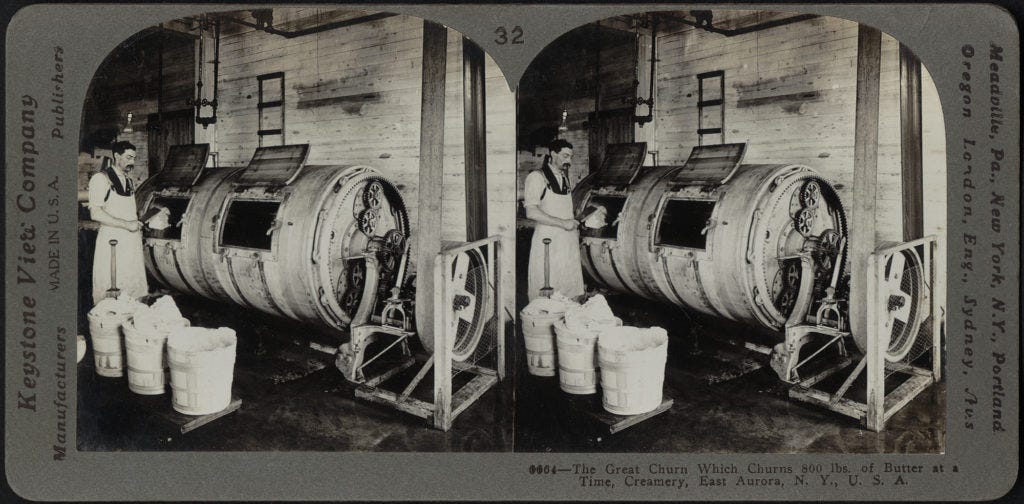
7. The Great Churn
In debate, each person’s speaking abilities are quantified in a speaker score from 0 to 100. Every tournament, this score is wrapped up neatly in a bow and immortalized on the online “tab.”
Growth tends to follow a somewhat linear line-of-best-fit rather than a random walk. Typically, this theory holds even for the types of debaters who begin their journey as the last team on the tab. The linearization of growth results from The Great Churn. A rotating door effect. When we welcome new entrants, we allow the old guard to slowly rise through the ranks. You learn, iterate, and improve. Your speaker score increases. A new team takes your place at the bottom. Rinse, churn, repeat.
The quantification of our abilities allows for the qualitative reimagining of our personal narratives.
In a few years, the budding freshman who currently gleams with potentiality will stand upon the stage of the Grand Finals. People will celebrate their countless successes, idolizing them in small pockets of the internet.
Behind the scenes, there will also be a doggedly persistent debater who makes up for their lack of raw skill through steadfast determination. They will break for the first time as a senior in college. They will quietly celebrate these victories.
We all rejoice in small successes. Some people’s highs will be other people’s lows. Some people’s lows are the peak of another’s career. We artificially construct our odds in order to proclaim we have beaten these very odds. Such is the hedonic treadmill. It is the horror and beauty of eternal recurrence.
8. Fungibility
My life is generally quite chaotic.
On a micro-level, each of my passing days resembles a sitcom episode. The embodiment of Lemony Snicket’s Series of Unfortunate Events.
Exhibit A: I am currently writing this block of text sitting in the back of a free 2-hour Lyft ride from Milwaukee to Chicago.
I did not end up in Milwaukee on purpose. It is 22 degrees Fahrenheit and I don’t have a jacket. The ice-defrosting machinery on my plane malfunctioned. It could not land in Chicago without a non-zero chance of implosion. I was rerouted to Wisconsin. I was supposed to be home 4 hours ago. My luggage is somewhere floating in the aether of aeronautical space. I don’t have my eye contacts, so I may be legally blind for the first week of class.
On a macro-level, my life is quite utopian.
In freshman year of high school, I was forcibly sent to a cash-grab debate summer camp in Public Forum (a popular American debate format), which I had zero preexisting knowledge of. I am incredibly privileged that my parents cared enough to sign me up for this camp. I am also quite possibly traumatized after being absolutely blown up into smithereens by kids who did understand Public Forum. These campmates went on to compete and win at the national level. I did not.
After the first week of camp, we were tasked with finding a partner for our inter-camp tournament. My somewhat-cutthroat roommate made a spreadsheet numerically ranking everyone at camp from best to worst in debate abilities. You might guess where I fell. I ended up partnering with the daughter of the camp’s CEO. She sobbed in the bathroom after multiple successive losses. I watched her awkwardly, my mouth agape. She dropped out of the tournament not long after. I finished the rounds alone. I did pretty bad.
What is this strange activity that people cheat, lie, and fight each other for?
After that summer, I coerced my friend into becoming my debate partner (somewhat against her will). Our high school team had no real coach, no real members. We found a minor smattering of success in our local league. We beat the types of kids who read plagiarized documents off of their iPhones and did not fill up speech times. In my sophomore year, I somehow found myself at the Pennsylvania State Tournament. We placed 5th in a whirlwind of utter confusion. After a year and a half, my partner and I both moved on to other pursuits. Deterred by a global pandemic, we stopped competing. I halfheartedly relegated myself to teaching debate to underclassmen who refused to be taught. That was the extent of my high school career. Debate was one of the things, but it was not The Thing.
Unlike many successful high school debaters, I never really achieved anything of note. I did not attend fancy tournaments hosted by Ivy Leagues colleges or qualify for Nationals.
I joined collegiate debate because it felt both familiar yet novel.
I have threatened to quit debate every single one of my four years at college.
I went 0-5 in my first in-person college debate tournament. Notably, it is statistically improbable for this to happen. After a certain number of losses, the tournament should theoretically give you a “bye,” a free pass to sit out a round and secure one “win,” at least on paper. This is a face-saving measure, a gesture of kindness. But I suppose the monkeys worked overtime at their typewriter.
In quite a comedic series of events, the tournament was another strange moment of eternal recurrence. Again, my debate partner cried in the middle of a round. She did not finish her speech. Again, I awkwardly watched, my mouth agape. Again, she quit debate not long after.
What is this strange activity that people cheat, lie, and fight each other for?
What kept me around? I was sent off to a tournament with a talented varsity member of our team. (I suspect this pairing was made somewhat out of pity, in light of the series of events described above). He was funny, intelligent, bright, enthusiastic, and encouraging. We achieved my first “break” by barely making it to the elimination rounds as the 16th ranked team out of 16 total breaking teams. We went up against the 1st ranked team at the tournament and promptly faced crushing defeat. We laughed ourselves silly. The tournament was a success. Success was fun, and fun was addicting. And so, I decided to delay quitting by another year.
One year became two, then three, and then I somehow found myself the president of the team. Skipping practice to look cool became competing every other weekend. Going 0-5 became unexpectedly placing 5th at Nationals in sophomore year. (I would like to draw your attention to the eternal recurrence of a sophomore year 5th place finish.)
As one of few women on our debate team, I probably received a healthy dose of institutional support in the name of gender equality. I partnered with some of the best debaters in the country, won some tournaments, and quelled a few bouts of anxiety in various bathroom stalls.
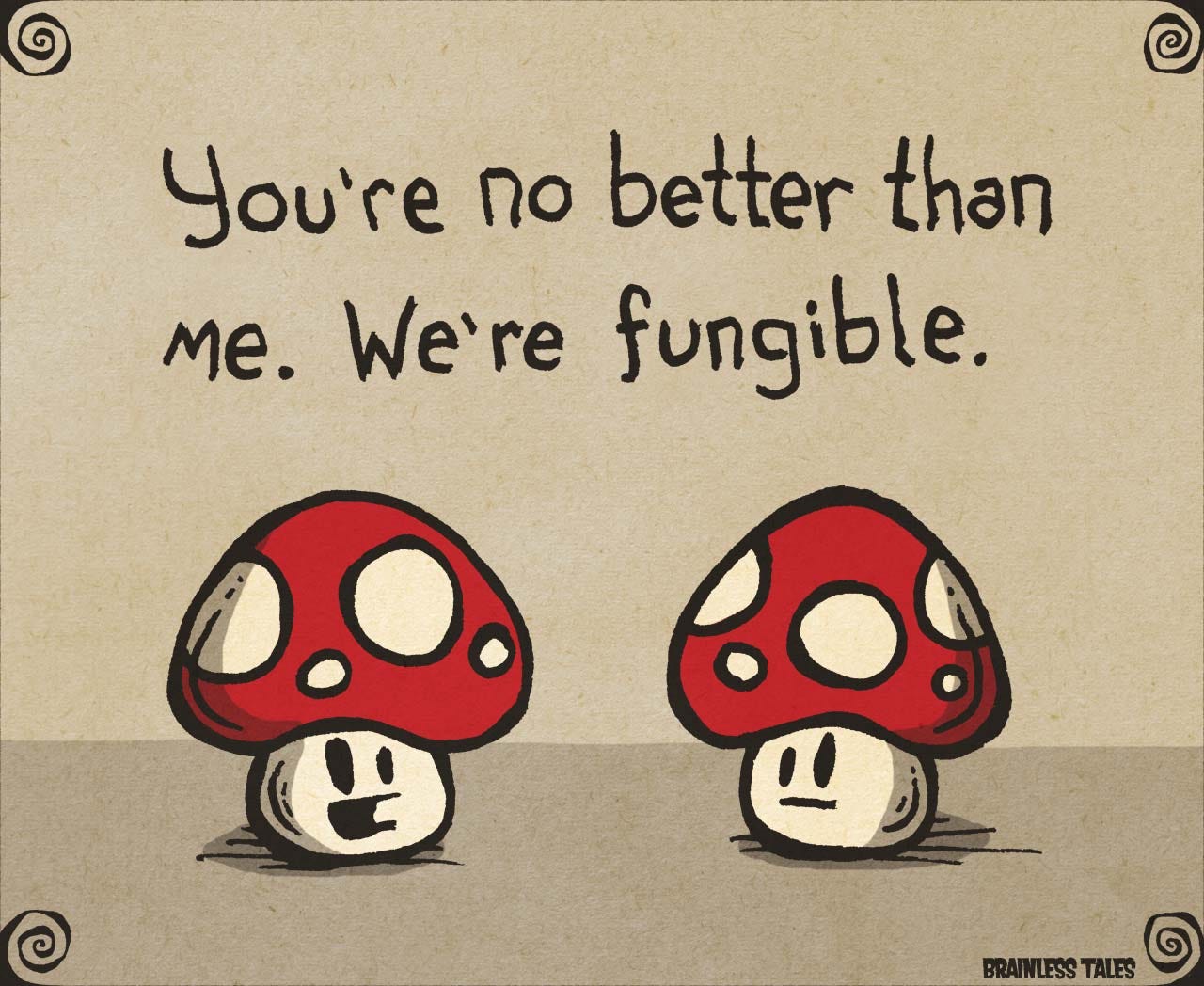
I relished in the experience of transforming from a fungible character to a shiny object. I gained tacit recognition from debaters I deeply admired. Sometimes these people even asked me to partner. I compulsively searched my name up in the competitive standings every once in a while. I enjoyed accumulating fake points on a fake scoreboard. Sometimes, I looked into the mirror and saw the eyes of my 9th grade self. If only she could see me now.
9. British Petroleum

I quickly grew tired of American debate, its gamified strategy and internal politics. In junior year, I vowed to tackle the insurmountable beast of British Parliamentary debate, the most popular format internationally. I was a debate purist, and I viewed BP as the only authentic test of intellectual ability. BP is a slow-talking, rhetorically graceful, truth-seeking form of debate. Composed of teams of 2 vs 2 vs 2 vs 2, it is a competition within a competition — a challenge not merely to win, but to win in the finest way.
The truth is, I had no idea what I was getting myself into.
I vowed to teach myself the inner workings of BP from the ground up. I was paired with a dedicated partner equally as inexperienced as I. Perfect. No more quiet accusations of being carried to victory. No more pithy recognition only relative to my gender. It’s true, most of my desires were fueled by internal insecurities. Still, don’t we all create disembodied hypothetical standards of ourselves to compare ourselves to?
Throughout my life, I’ve been a half-committal type of person. I am adept at mediocrity. I attempt many things with middling success — painting, writing, designing, teaching and so forth. I never really advance past the plateau. So, my desire to succeed in BP was both fueled by my desire for validation and a morbid experimental curiosity. Some people scale mountains or run marathons. Debate was my attempt to test my mental fortitude: What could I achieve if, for once in my life, I committed myself 100% to a singular activity?
The beginning wasn’t pretty. I tried and failed and tried and failed and tried and failed to make sense of this strange game. Speeches that came intuitively in the American circuit now appeared as an incomprehensible jumble of rules, paradigms, and norms which I could not quite grasp. A sinking sense of inadequacy lingered in the back of my mind. I couldn’t articulate to my friends and family why I lived in a smog of sullen gloom.
I debated at 9 or 10 tournaments in the span of six months. My exasperation was nonsensical, erratic, and absurd. To an outsider, the silly game of debate is amusingly unintelligible. How do you explain the feeling of self-contempt after dropping a bubble round, fumbling a crucial response, or botching an argument? The obviously comical nature of my irrationality only irritated me further. Why did I wake up at the crack of dawn to debate at random online tournaments in foreign time zones? My sympathetic and bemused roommates could not quite piece together what was so wrong.
Is debate really an act of free will?
In the process of chasing validation, I voluntarily withdrew myself from a litany of life experiences. I invented excuses to miss birthday parties, music festivals, and family vacations. I debated from hostel bathrooms, airport gates, outdoor cafes, and car rides.
Once, I spoke a bit too passionately from the single-stall bathroom of an ice cream store. A concerned worker asked if I needed help. Another time, in the middle of a tournament, my mom ran into my bedroom in fright thinking I was having a blowout fight with my dad. Oh, I was also almost hit by a car while debating in the streets of Beijing… riding a rental bike.
Sleepless nights, stress hives, missed classes — are these the markers of free will? By chasing the nebulous goal of achievement, do I simply trade one deterministic existence for another? A road less travelled is still a road.
I don’t have an answer to these questions.
Do the ends justify the means, or should we stop to smell the flowers along the way?
When I look back at my time in debate, I have no real regrets. How much of this is attributable to the end outcome, I cannot say.
10. Happily Ever After
The 2023 Vietnam World Championships was one of the most euphoric moments of my life. I cannot quite capture the unadulterated joy that comes with defying every possible expectation. Each of our iterative successes only compounded this ecstasy. More than a few times, I had to incredulously triple-check that my ears did not deceive me.
I did not want to attend this year’s World Championships in Panama. I was deathly terrified of being exposed as a fluke. A one-hit-wonder. What fool turns the page after “happily ever after”?
Without the motivation of novel achievement, I could not bring myself to try. If you can’t even beat your past self, why attempt at all? My goal of operating at 100% became 50% then 25% then 0% until it was three weeks before Worlds. As the days grew closer, I sent myself into a panicked tailspin. I crammed news stories into my brain, working overtime to counteract a year of inertia. Alas, the dull drone of validation-seeking never truly leaves you.
This year, I felt a very different type of elation. When you’re fueled by fear, the feeling of jubilance blurs with the sweet release of relief. Consistency is certainly far better than regression: I achieved the same outcome in almost the exact same way. In Semifinals, we put up a meek fight and sputtered out unceremoniously. Our accomplishments will quickly fade into oblivion. Why did I decide to re-narrate the same old story?
It’s quite strange. Almost every debater who makes it to the Grand Finals comes back for a second and third helping. Many of them never live up to their past accomplishments. For some reason, people don’t just want to be the best, they want to be The Best Of All Time. It’s the warning of Icarus. Have we not learned? Sequels are usually never as good as the original.
Do I regret The Great Churn? I’d like to believe that remakes can still teach us something new. We invent fables about falling from grace or achieving ultimate redemption. Sometimes, we end up with cautionary tales about failure, humility, and disappointment. Other times, we compose inspirational parables about persistence and resilience.
Sure, a fluke can happen more than once. What is desert anyways? Perhaps I have successfully chipped away at my feelings of inadequacy. Maybe I feel less like a glitch in the matrix. Or, I can now languish over each way I have tangibly fallen short of my past performances. Each self-deviation picked apart, dissected, examined under a microscope. A weaponization of my personal history.
And we all lived happily ever after.
11. Iconoclasts
“Through fantasy, we learn how to desire.” —Slavoj Zizek
I think one reason why so many of us keep coming to this activity is because we crave the feeling of being in control of our own fate.3
Where else can you find legions of people eager to crowd around you in a classroom, hanging onto your every word? It’s no surprise that some debaters develop Messianic complexes.
Debate creates a destabilizing type of egomania. In this sub-community of a sub-community, nobody really matters, so everyone does. Power plays and social games create the illusion of iconoclasts — a subset of elites venerated by a small crowd of hopefuls.
After each year’s Grand Finals, the finalists are always mobbed by a herd of excited spectators. Perhaps they believe that by speaking to a finalist, some of the shiny stuff might rub off. When you make the winning bet in a horse race, maybe some of the horsepower belongs to you. In an activity where the same circle of debaters compete with, train against, judge, and coach each other, everyone owns a bit of everyone’s success. (So we can be socialists after all.)
Outside of their teeny microcosm, many debaters appear pretty quiet and unassuming. They wear chunky black noise-cancelling headphones. They hide out in the shelter of their own overactive minds. They stuff their hands in their pockets, walking with their shoulders slightly upraised. They live in a constant state of hypertension. Ordinary celebrities.
I am guilty of giving and receiving this strange currency of status. I herd and I flock. I entangle myself into conversations with people who wouldn’t look twice in my direction two years ago. I feel ripples of dopamine after receiving a new friend request. I update my mental benchmarks with the constant informational feed of who-won-what-thing.
Debaters possess a double consciousness. We are Dr Jekyll and Mr Hyde incarnate. On one hand, debaters (as much as everyone else in society) are judged by their physical appearance — the width of their eyeliner, size of their jeans, total number of piercings. We reward those that comply with our conventions of beauty, quantifying their attractiveness in an arithmetic scale.
Yet all debaters possess another face. It is a disembodied horcrux, an invisible appearance consisting of your points on the tab, the cumulative sum of your victories, and the length of your CV.
On the second day of a tournament, are you a 9, 10, 11, or 12? Human beings, reinterpreted through a numerical standing, refreshed every three hours. Through this mirage of prestige, we construct an artificial measure of attractiveness. Skill becomes the force of attraction. Perception, power, and influence rises and falls with your place on the screen. Curiously, this strange new force often transforms otherwise commonplace people into a social object of desire, the Lacanian objet petit a.
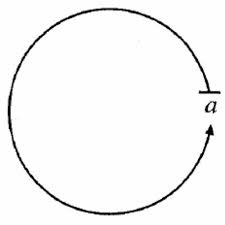
The objet petit a is never attainable. It is, by definition, a hole at the center of the symbolic order, the appearance of a secret which cannot be signified or translated. We create ourselves in the image of those we admire. We gaze longingly at the altar of prestige. It doesn’t really matter which iconoclasts we pray to. In reality, remembrance is fickle. Everything is seasonal except our desire. Our desire is reflexive — it constructs our notion of self.
Jouissance: a paradoxical experience of deriving pleasure from pain.
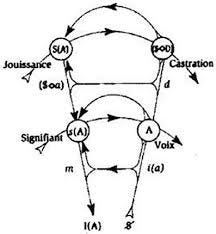
We love to hate ourselves. We love to hate the ideal of who we could be. When we flock towards the victors, our desire to be physically proximate to them is really the desire to subsume them into our fantasy. We desperately want to anatomize the brains of geniuses and discover what secrets they hold. But deep down, we know the truth: There is no secret. There is no formula, no slight of the hand, no antidote. Sometimes, reality just is. People just are.
The act of idolization is both a distancing and a nearing. We want to congregate around our idols, yet we also want them to remain an arm’s length away. To see an illusion is to destroy it. If we confront the truth, we confront our own mediocrity. We want to believe in the illusion of meritocracy when no steady state exists. We believe in immortality while simultaneously benefiting from The Great Churn.
"Our object of desire (what Lacan terms the "objet petit a") is a way for us to establish coordinates for our own desire. At the heart of desire is a misrecognition of fullness where there is really nothing but a screen for our own narcissistic projections. It is that lack at the heart of desire that ensures we continue to desire. To come too close to our object of desire threatens to uncover the lack that is, in fact, necessary for our desire to persist, so that, ultimately, desire is most interested not in fully attaining the object of desire but in keeping our distance, thus allowing desire to persist. Because desire is articulated through fantasy, it is driven to some extent by its own impossibility.” (Modules on Lacan: On Desire)
So, so, so. Debate remains a lack. True fulfillment always remains three paces away. Hearts continue to shatter, dreams continue to fade.
I have achieved everything I could have possibly hoped for and more. I will continue to question the legitimacy of these achievements. I will wonder if it was all a big coincidence. I will not have an answer to my questions. I don’t want the answer to these questions. Reality is often painful, and I prefer to exist in a fantasy. If time stands still, there is nothing left to prove.
12. Conclusions
“Ultimately, man should not ask what the meaning of his life is, but rather must recognize that it is he who is asked. In a word, each man is questioned by life; and he can only answer to life by answering for his own life; to life he can only respond by being responsible.” ―Viktor E. Frankl
But of course, we are tempted to narrate our lives! We need to believe in the pot of gold at the end of the rainbow. Viktor Frankl was right. We are all men in search of meaning. We want a little portrait in our back pocket to ground us during a crisis of faith— we yearn for beautiful and tragic stories, moments of triumph in a sea of mundanity.
I am deathly terrified that nothing will ever compare to these divine moments of catharsis.
Some people don’t get a happy ending. The fiery wick of early success will burn into a puddle of dreary wax. What then? How do you narrate a lackluster epilogue? Does it matter?
I will soon stop giving speeches consisting of fancy rhetorical introductions and contrived metaphors. I will stop ravenously consuming news stories and podcasts for the sake of factual regurgitation. After some time, I will stop habitually refreshing social media for the latest updates in the debate stratosphere. I will fall out of touch with friends and acquaintances. My social circle will shrink. Daily conversations will become mundane. I will struggle to articulate what it means to fill an argumentative burden, the crisp satisfaction of a snappy reply, the buoyant feeling of snagging a 1st. Under the slow diaspora of time, I will forget the language I once knew like the back of my hand.
Debate will always be a feeling of jouissance. We will reminisce on the good old days with a pang in our chest. We will struggle to articulate whether this pang consists of regret, nostalgia, joy, pride, or something in between. We will reimagine pivotal moments, regive crucial speeches in our minds. We will curse ourselves for the easy fix. We will blame ourselves, then the world, then ourselves all over again.
The Freudian death drive lives beyond the pleasure principle. It spans across the border of life and death in an interminable expanse of grayness. Debate is a journey of endless heartache and inexhaustible what-ifs. Depersonalization, narrativization, reinvention. We will never be enough, and that will have to be enough.

Right now, I am happy and sad and mournful and jubilant and tired and melancholy and apathetic and everything in between.
I am somebody and a nobody and an anybody.
Oh, and I am finally at home now, lying on my living room couch. But I think part of me is still stuck in Panama. Part of me will live on in the pandemonium of this beautifully painful activity, wandering around a humid hotel lobby brimming with vaguely familiar yet foreign voices. I will live in this fantastical cacophony of ostentatious, impassioned, desolate, exquisite words. I will believe in the fantasy of a zero-sum-game that somehow sums to infinity. I will continue to narrate my life, weaving stories out of nothingness. Some of that will always live on.
Fin.
Do you feel the second hand embarrassment?
Side note: The epidemic of fully grown adults debating should be studied as an anthropological phenomena, but that’s a different story.
At this point of my sleep deprived journey, I had fully gone off the deep end. Proceeding text will reflect this mental state accordingly.
That was really intersting to read, thanks, it was really perceptive and entertaining. I always think there is something different that sets people different from those who persue this untilmately futile hobby. Most hobbies have real life tangible benefits but debate seems to promise that and ultimately not deliver. All you gain from years of yelling is some soft skills and random facts.
To debate (competitively) is to expose yourself to such a multifaceted activity that the words that will eventually come out to describe your feelings and thoughts about it will be neither indifferent, nor boring.
Thank you for sharing your thoughs from last year. I read it all without a pause.
20 years after my last active participation as an adjudicator at a World's - Dublin 2006 (just a passing outrounds spectator at Thessaloniki 2016) and 25 years after my last 8 WUDC debates (Glasgow 2001 never had a 9th preliminary round due to heavy snow), your words capture elusive memories of the exuberance of being young amongst other youth from all over the world that were willing and able to communicate about everything. I appreciated the psychoanalytic references (seems quite fitting) and the description of the inner and outer pandemonium that a World's can be. Kudos.